Zero-Waste design with prisoners
Participatory research with women prisoners - Masters of the Arts project
London College of Fashion and HMP Downview, London - October-November 2018
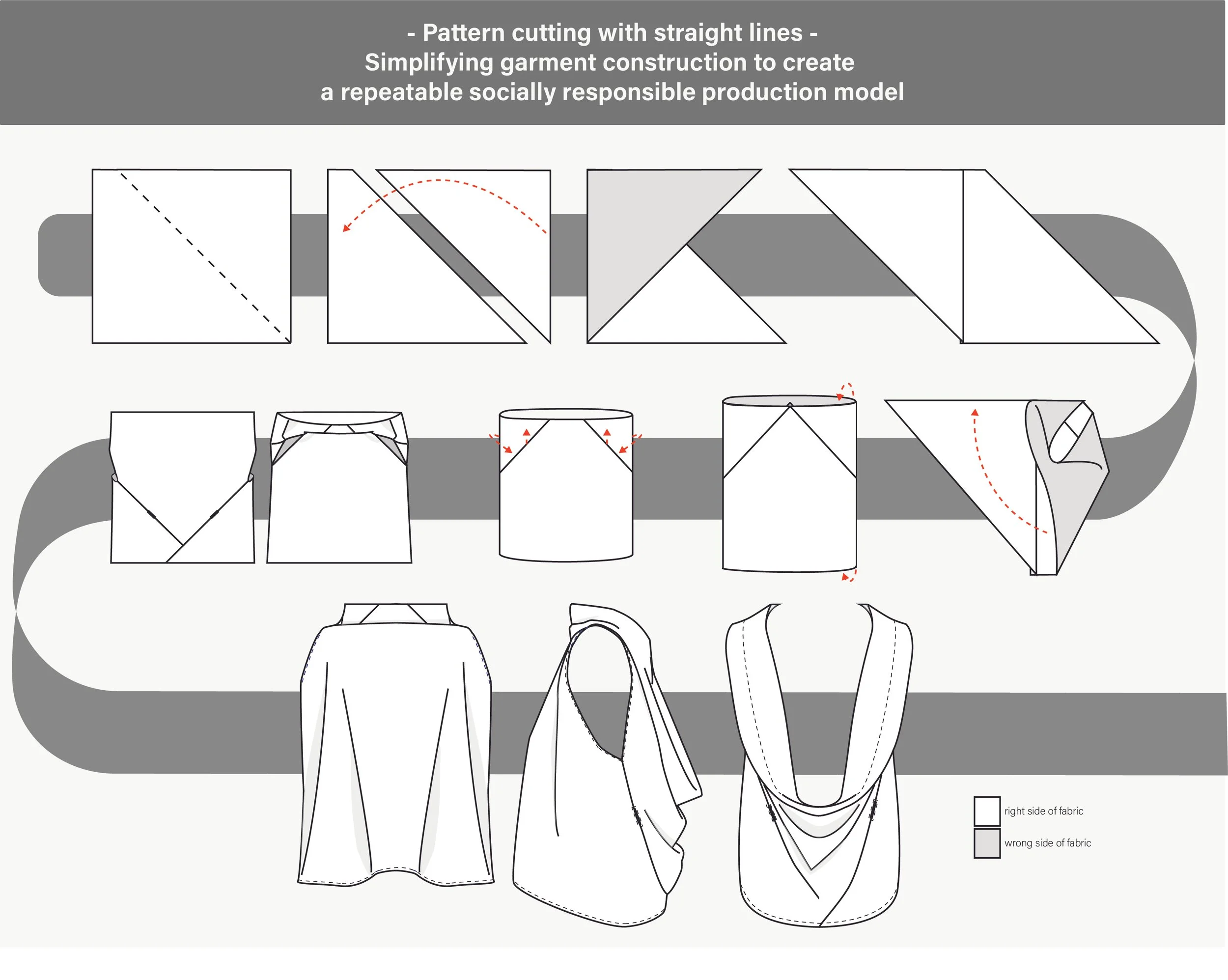
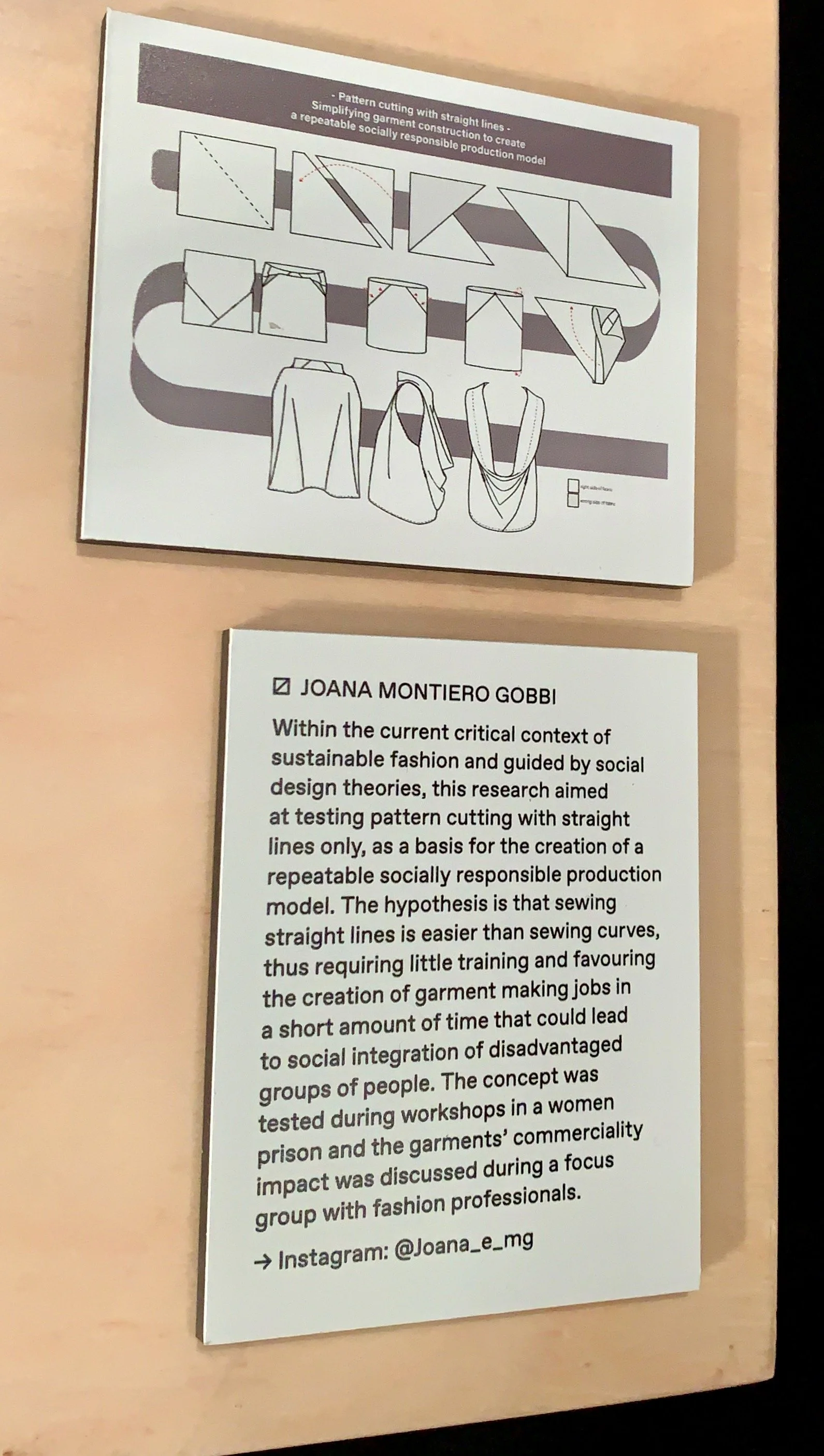
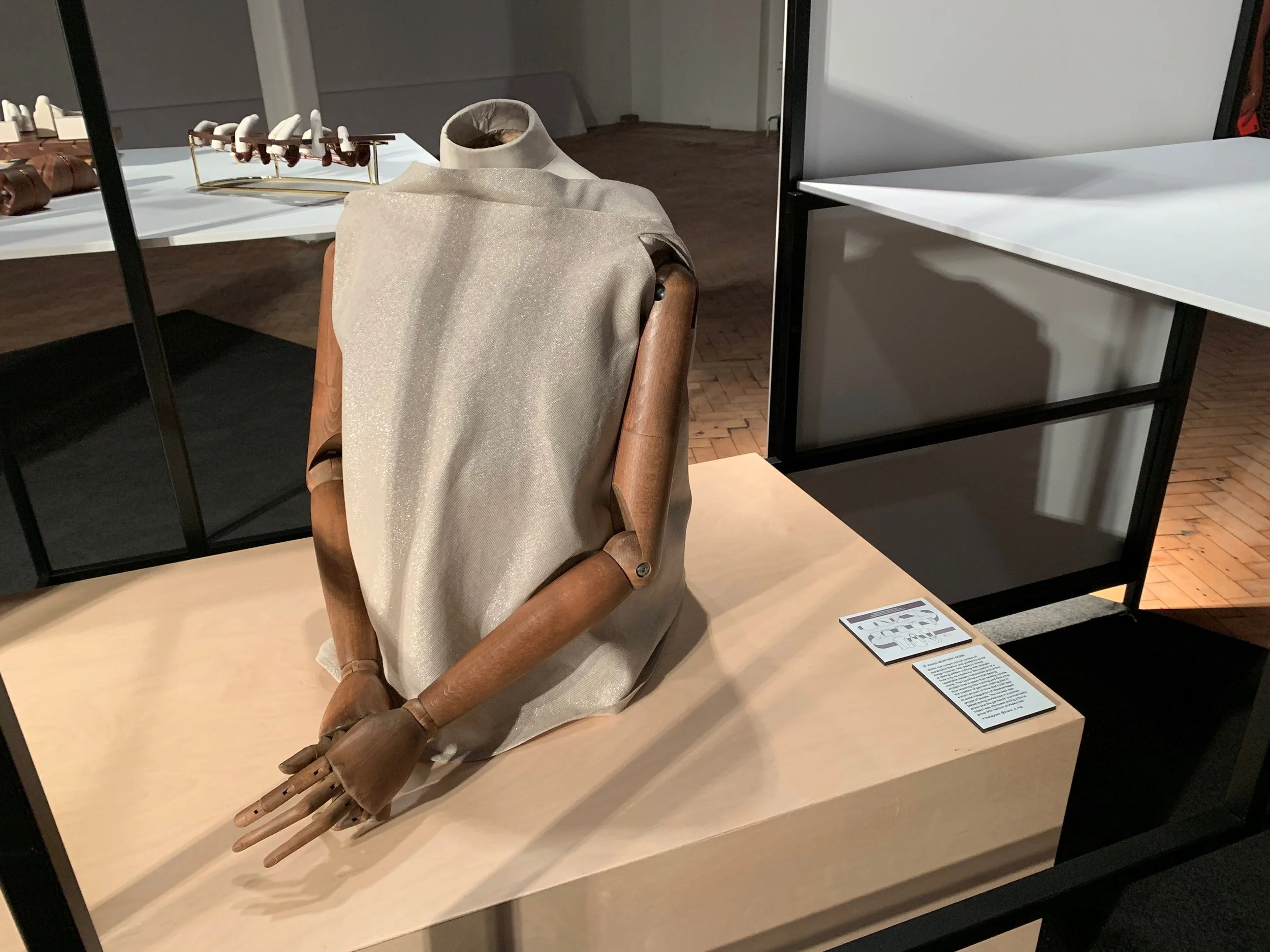
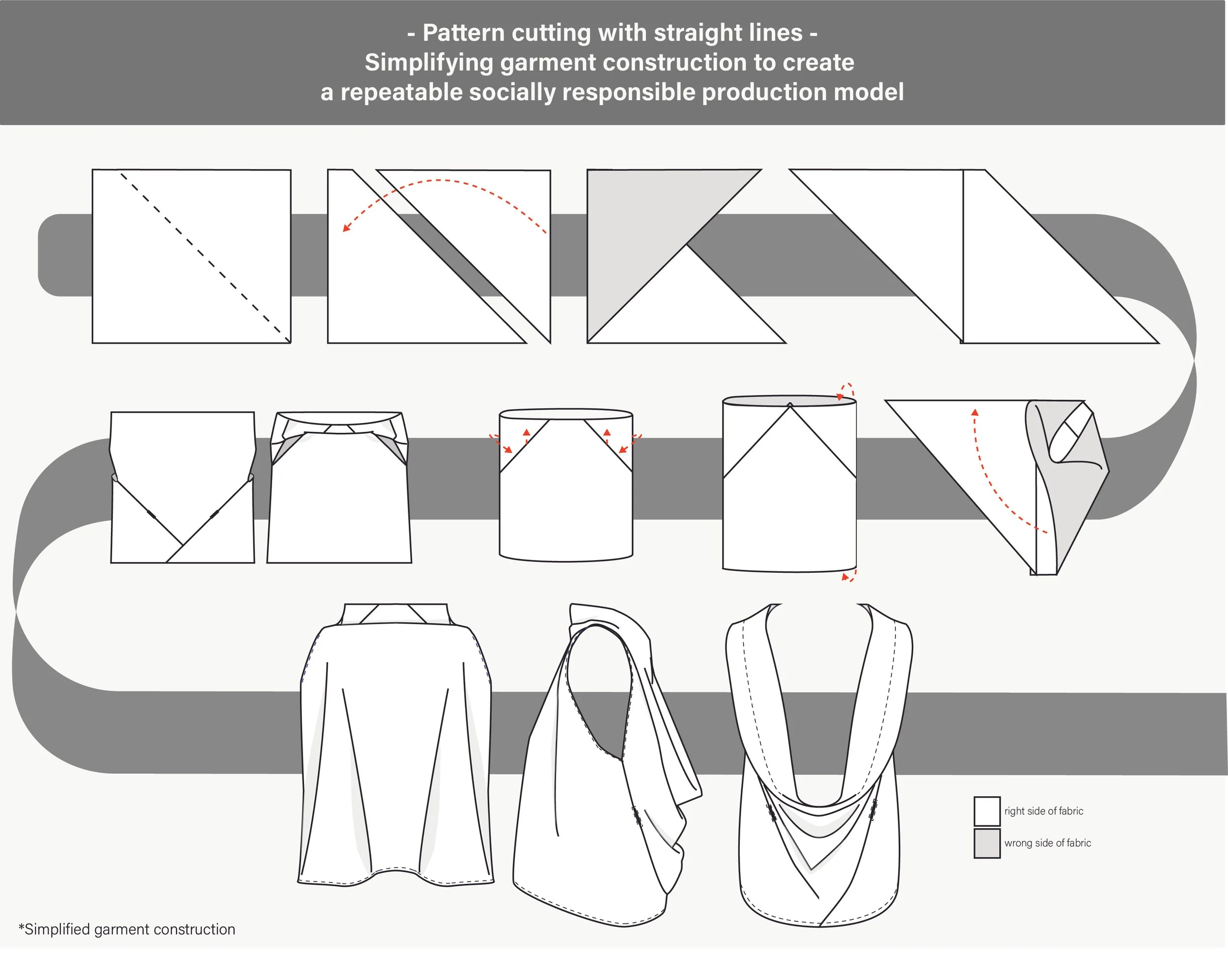
My Masters’ project focused on testing the potential of a pattern cutting technique as an enabler of well-being improvement. Within the critical context of sustainable fashion and guided by social design theories, this research aimed at testing pattern cutting with straight lines only, as a basis for the creation of a repeatable socially responsible production model. The hypothesis was that sewing straight lines is easier than sewing curves, thus requiring little training and favouring the creation of jobs in a short amount of time that could lead to social integration of disadvantaged groups of people.
Following action research principles, the project went through three phases: a pattern design phase to create high quality sophisticated garments, inspired by zero-waste design; then proof of concept workshops in a women’s prison; finally quality and marketability assessment through quality inspection of the garments made during the workshop and a focus group with fashion professionals.
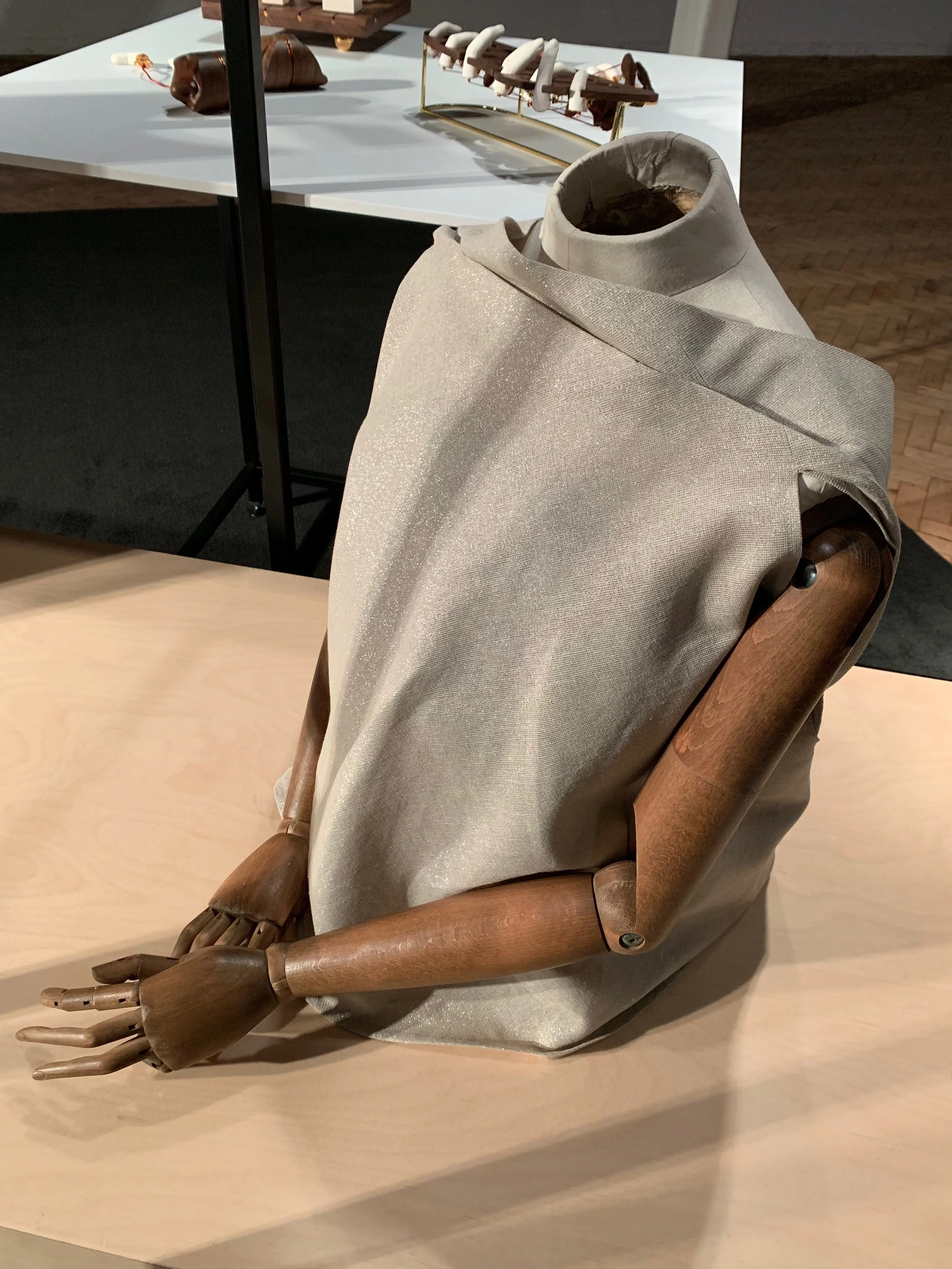
Through challenging the role of the pattern cutter within the product development process, the research developed a new approach to social design within fashion. The findings highlighted that it is possible to create high quality sophisticated designs that can be adapted to the skills level of the makers. To a certain extent, straight lines simplify the making of the garment and would, in theory, make the approach repeatable within different groups of people.
Despite its limitations, the project was successful in having a positive impact on the women who took part to the research, giving them a sense of pride and self-confidence.
Exhibition: 19-21 September 2019, London Design Festival